
We have been hard at work with our GIS database. The goal is to have a single map location to view everything from where crosswalks are located, how affordable different neighbourhoods are for rent, what’s the median income of different locations, how much tax revenue per meter of road different streets are, and so much more.
We will be working with organizations such as the Happy City St. John’s, Accessibility NL, Bicycle NL and more to help generate the data they need to tell the stories we all need to hear. We will also be helping municipalities see data that is critical in understanding where their taxpayers money is ineffective, and where it could be better directed.
We are aiming to launch this Fall of 2023.
This map is now live! See below. V0.9 is now live.
We are proud to present Version 0.8 of our St. John’s Metro Mobility Infrastructure (boring name I know). This database includes five sets of data you can explore for the entire St. John’s Census Metropolitan Area according to Statistics Canada. The dynamically viewable data is as follows:
- Vehicle Parking Data
- Parking Classifications
- Vehicle Driving Lanes
- Sidewalk Locations
- Roadside Bicycle Infrastructure
Click the image below to open the GIS database in a new tab or window

This is Version 0.8 as it only contains 5 fields of data. We currently are looking at over a dozen more sets of data, and expanding some of these existing sets of data.
- Metrobus transit data
- Road speed limits
- Shared-use paths not along a street
- Age and income demographics
- Total free parking for cars
- Driving space asphalt areas
- St. John’s sidewalk snow clearing
- Transit ridership
- Cycling ridership by location
- Median income maps
- Raw municipal zones
- Municipal zone functions
- Built-up area housing inventories
- Transit proposals
- Municipal maintenance costs
Future database mapping projects
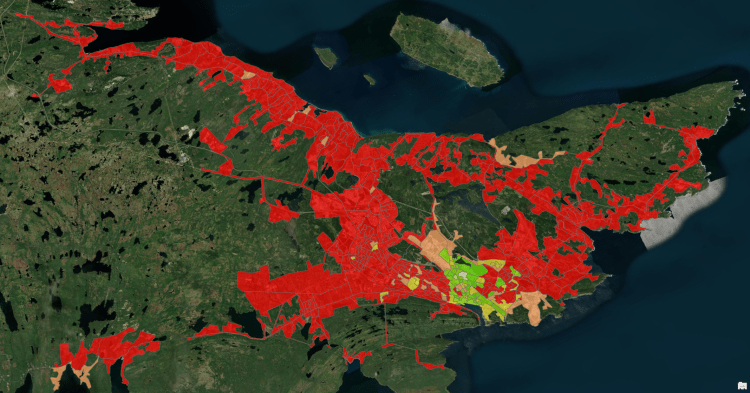
We invite you to come along as we explore municipal data, and really dig into how our municipalities function. We have several other database projects in the pipeline in some various form of completion. You can look forward to more maps, articles, posts, and more. You can see the concepts page for a better description but here are some snapshots of project actively in the teams pipeline below.


Volunteers
This is Version 0.8 of the surface mobility infrastructure database. The team of volunteers have spent well over 700 hours curating this data for the public to peruse. This data is not perfect, but it helps paint the broad picture and gets the conversation started when it comes to the data included. We know there are some small errors you will find, but please be patient as future version will correct errors, add more features, and include more data in the coming months and year. Feel free to contact us if you see a glaring issue. For example, Team Gushue Highway phase 3 showing up as complete is an example of an error that will be corrected.
Previous versions have been internal only, with team members working on the core data to get it to a point we were happy with. We are working on Version 0.9 and that should be out before the end of 2023. Version 1.0, which will be a robust complete mobility infrastructure map of the entire St. John’s CMA, should be out in Q1 of 2024. Other projects will come out in the interim, so stay tuned.
Not all the municipalities have in depth data available with common fields. We will show what we know. This will evolve over time, so again, please feel free to contact us if you have information we may be able to add to the database.
Issues loading?
When you load the ArcGIS website, you may have to click a few times before you can start exploring. First, click the ‘hamburger icon’ in the top left of the screen. Then click on the second icon that looks like three sheets of paper stacked. Next click the arrow next to “North East Avalon (NEA) Mobility Infrastructure”. The five layers will then show up. You can expand and toggle them as you please.

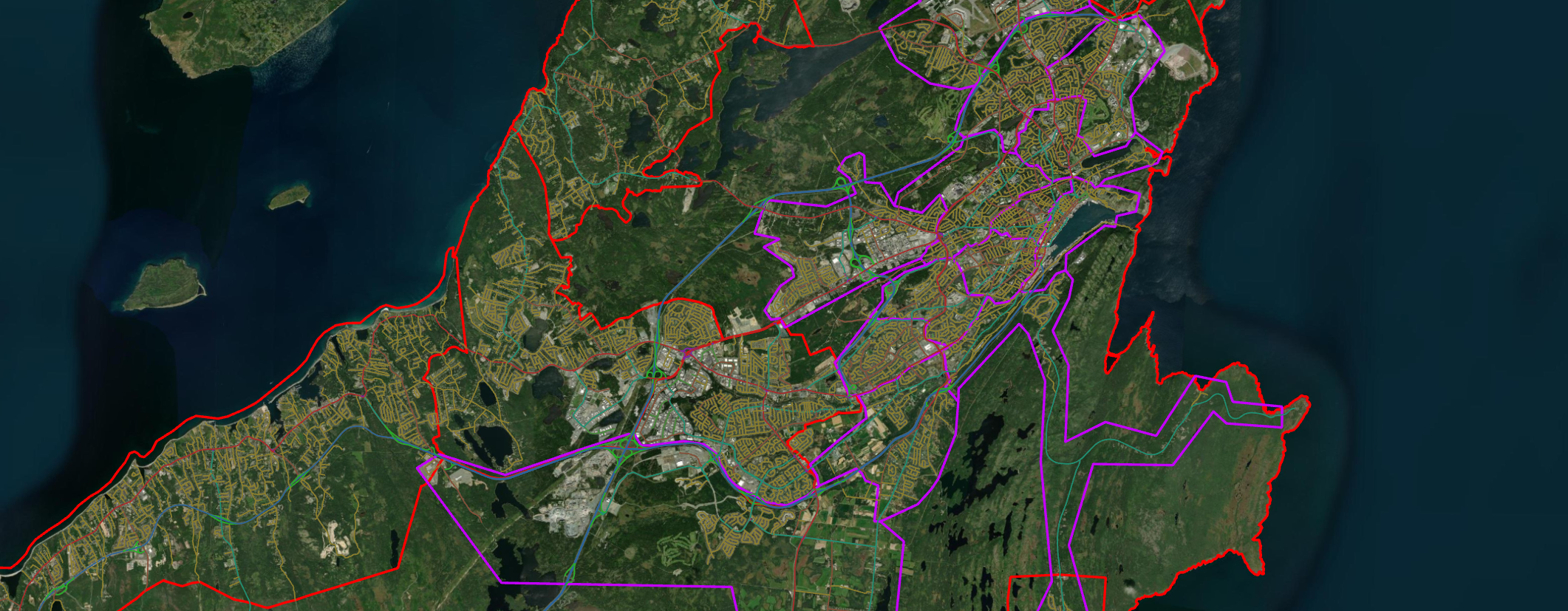
If you still cannot load the map, the old slider map seen below shows a a very small slice of the data we are working on. What started as simply looking at street infrastructure has evolved into transit planning, zoning analysis, Statistics Canada data analysis mapping, municipal financial analysis and more.

 streetsafp.ca