Our streets are wide. This shouldn’t be a revelation to most people. St. John’s lacks many of the truly horrendous ‘stroads’ of the rest of North America, but that doesn’t mean we have the narrow quaint roads of historical Paris or Rome. Take Terra Nova Road between Stamps and Crosbie, for example. This ‘one lane one way road’ is practically 10m wide.
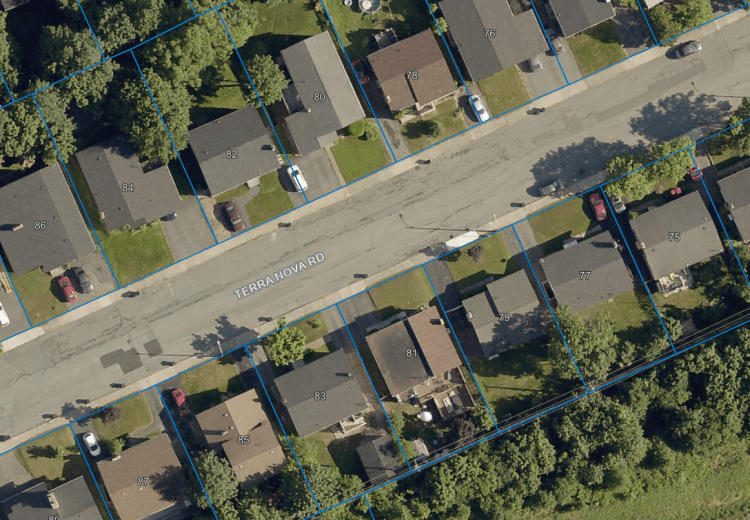
“Ugh here he goes with more numbers again” I hear you say. I agree! Only using numbers to convey our message is a brick-wall of advocacy. It is why our posts have graphs, maps, and tables. However what you will see little of are example images. So when it comes to talking about street cross sections it would be nice to have a graphic.
Well there are many things I am pretty good at, but graphic design isn’t one of them. I can make a mean map, or give you a set of issued for construction drawings to put together a work site, but don’t ask me to draw something aesthetically pleasing. So I was very happy when I came across a website called streetmix.net in a recent video from Ray Delahanty’s youtube channel, City Nerd. Streetmix allow someone to rapidly prototype a road section in a simplified artistic manner, with some statistics in there for good nerd measure.
So I thought why not do a few sections across the city and show people how our road right of way’s (ROW’s) are set-up. You can read all about them on pages 45 through 50 in the Development Design Manual if you are so inclined, however I’m not here to issue homework.
We’ll start with a section of the above mentioned Terra Nova Road.
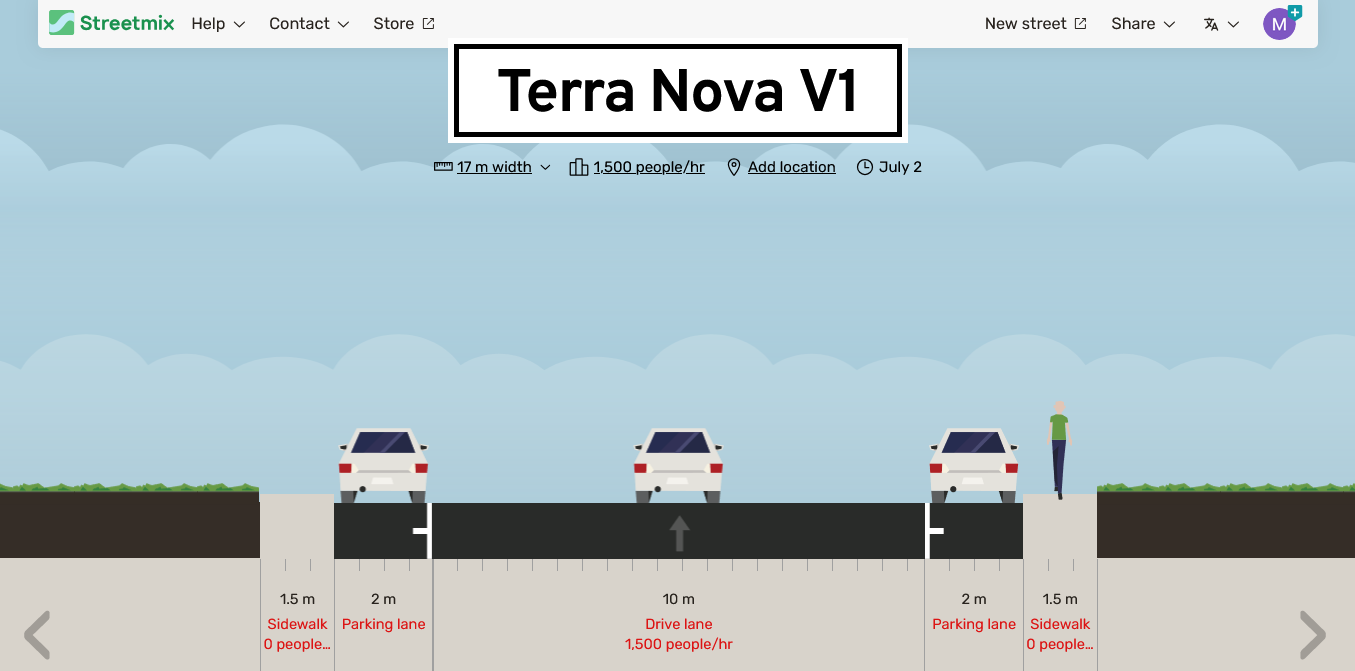
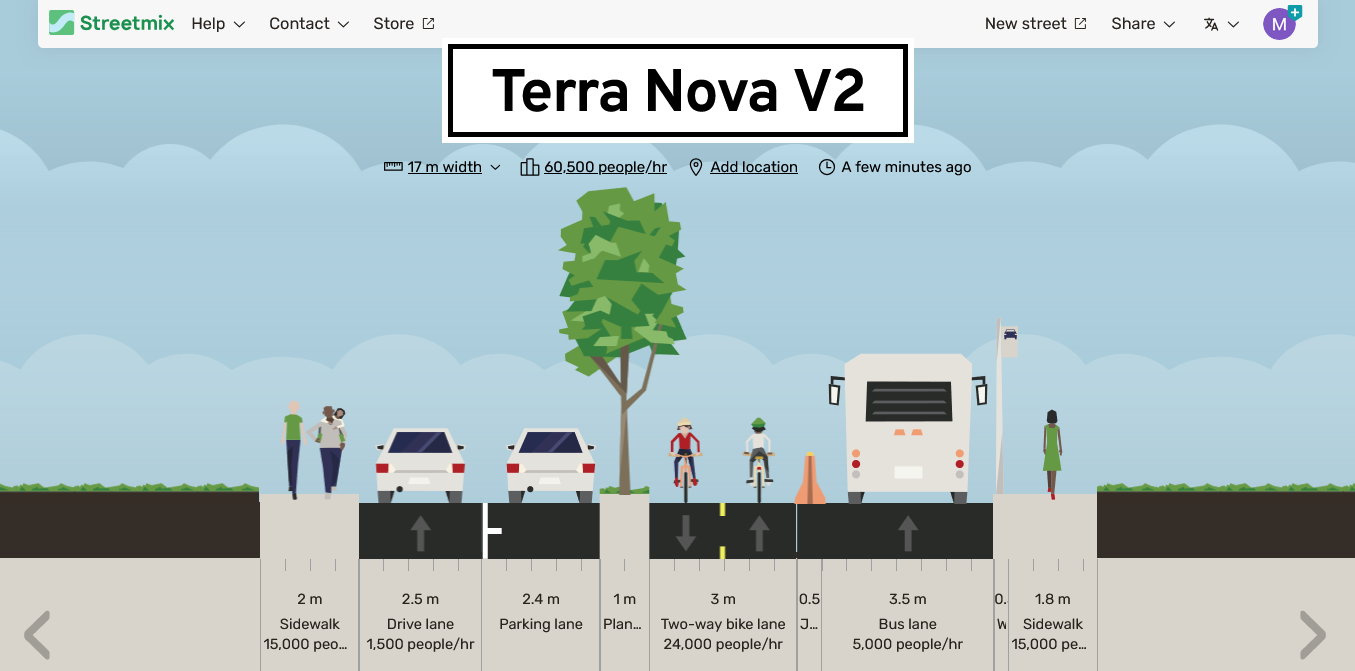
This rest of this post is pretty simple. this is going to show what our current designs are, vs what we could do. If we stand back and look at our city, we dedicate the vast majority of public ROW’s to cars. Very little of it is for pedestrians or cyclist first. So without further adieu, enjoy.
Local Streets
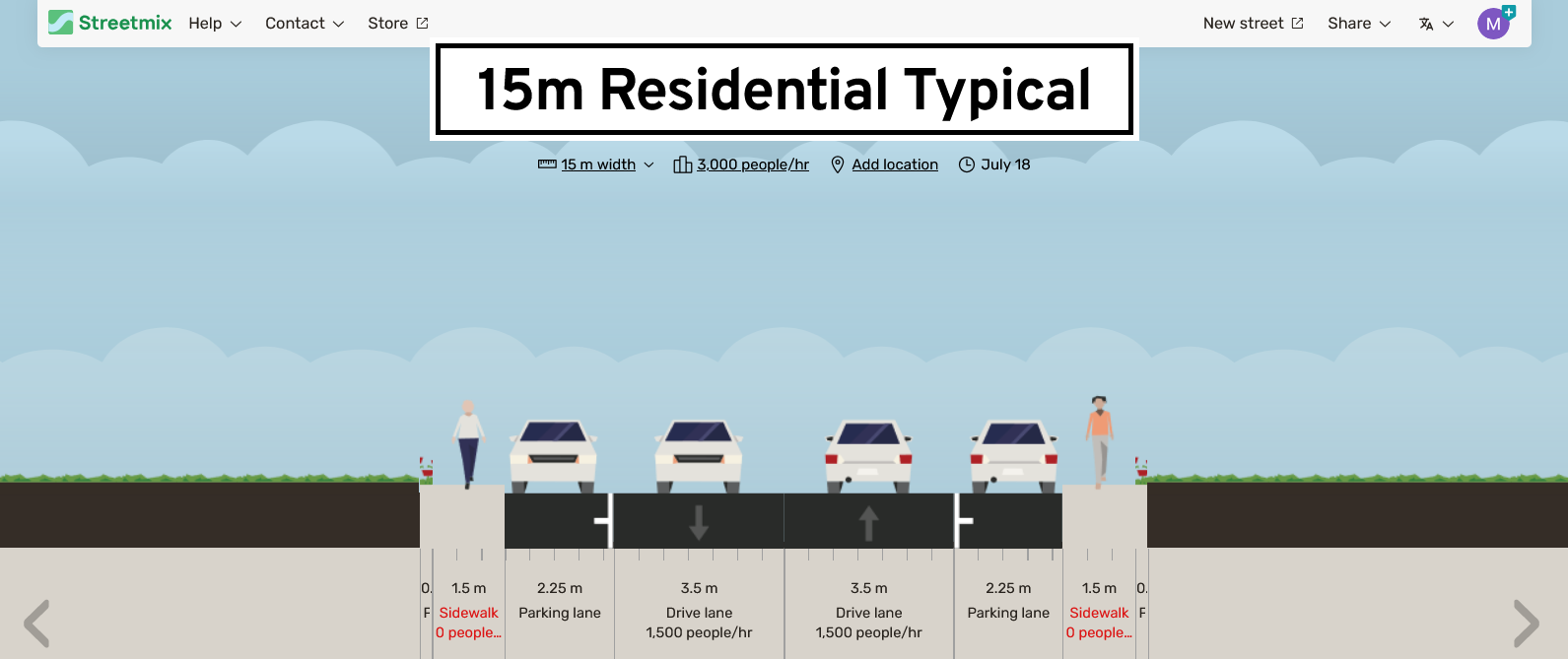
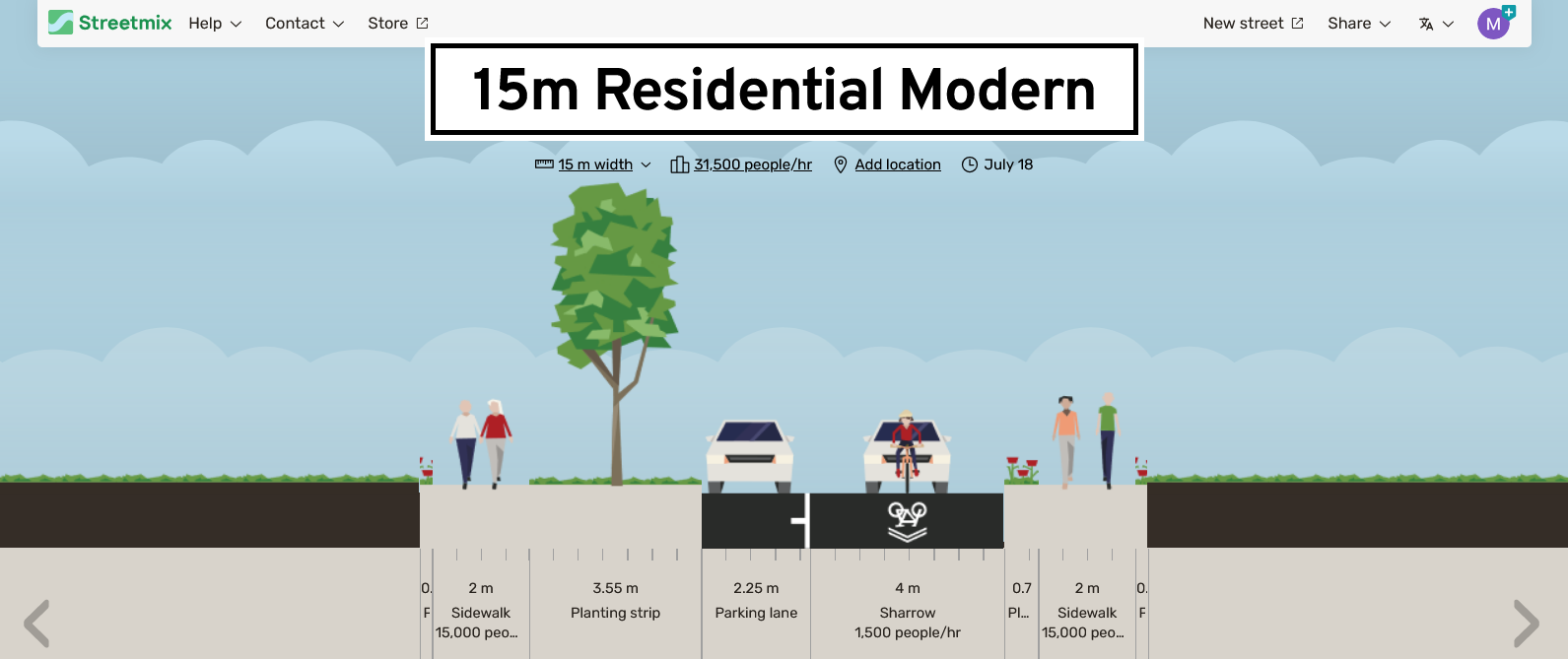
We need a new vision for future local streets and a plan for when we must maintain existing local streets. What if we just removed half of the street asphalt? From a traffic management standpoint, making local streets one-way would slow traffic, prevent through-running, and provide the ability to just mix cycling in with slow traffic. Aside from traffic, greening some of the right of way could provide plenty of space to store snow, which reduces how much is in your driveway, reduces rainfall runoff which helps with flooding downstream, and could provide future shade from large trees. Having every street set to 50km/h is unsafe and noisy.
Collector Roads
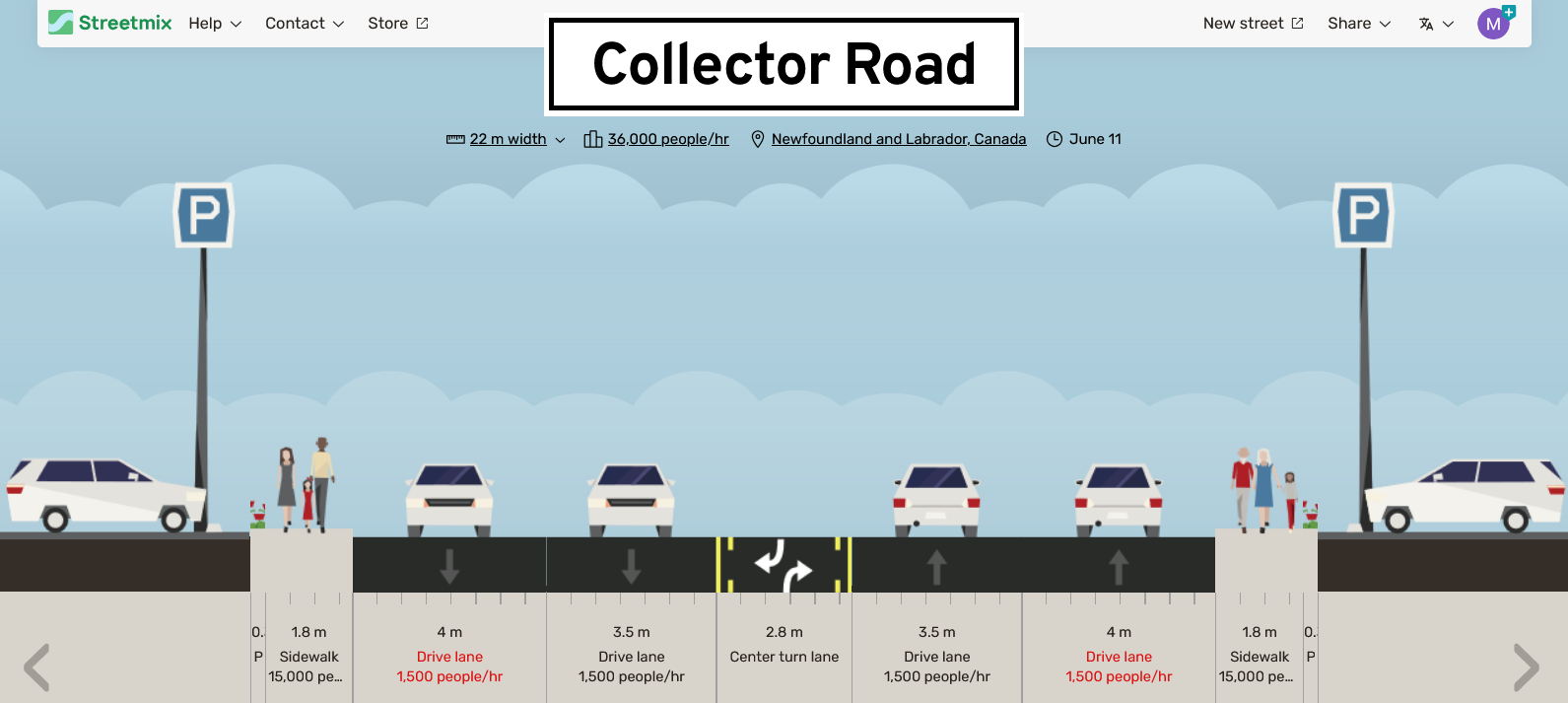
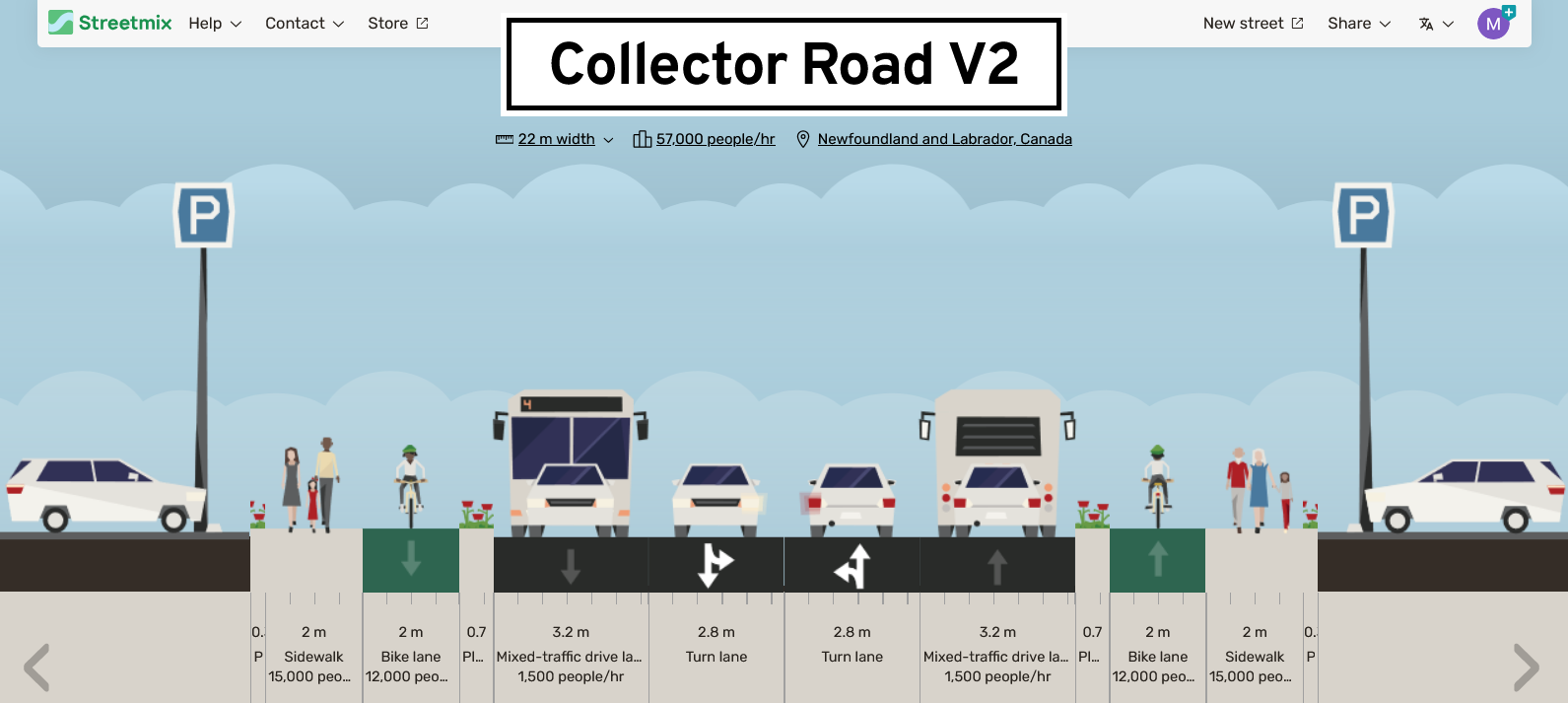
Kenmount Road, Topsail road, Torbay Road, and many more are just like this. 5 lane monstrosities built assuming everyone drives a tractor trailer. Why not narrow lanes down to what our federal regulations suggest for inside a city. We could easily provide protected cycle paths on both sides of the road and slow traffic down in the meantime. If you want to cross town in a car, take the highway (future post coming about traffic management).
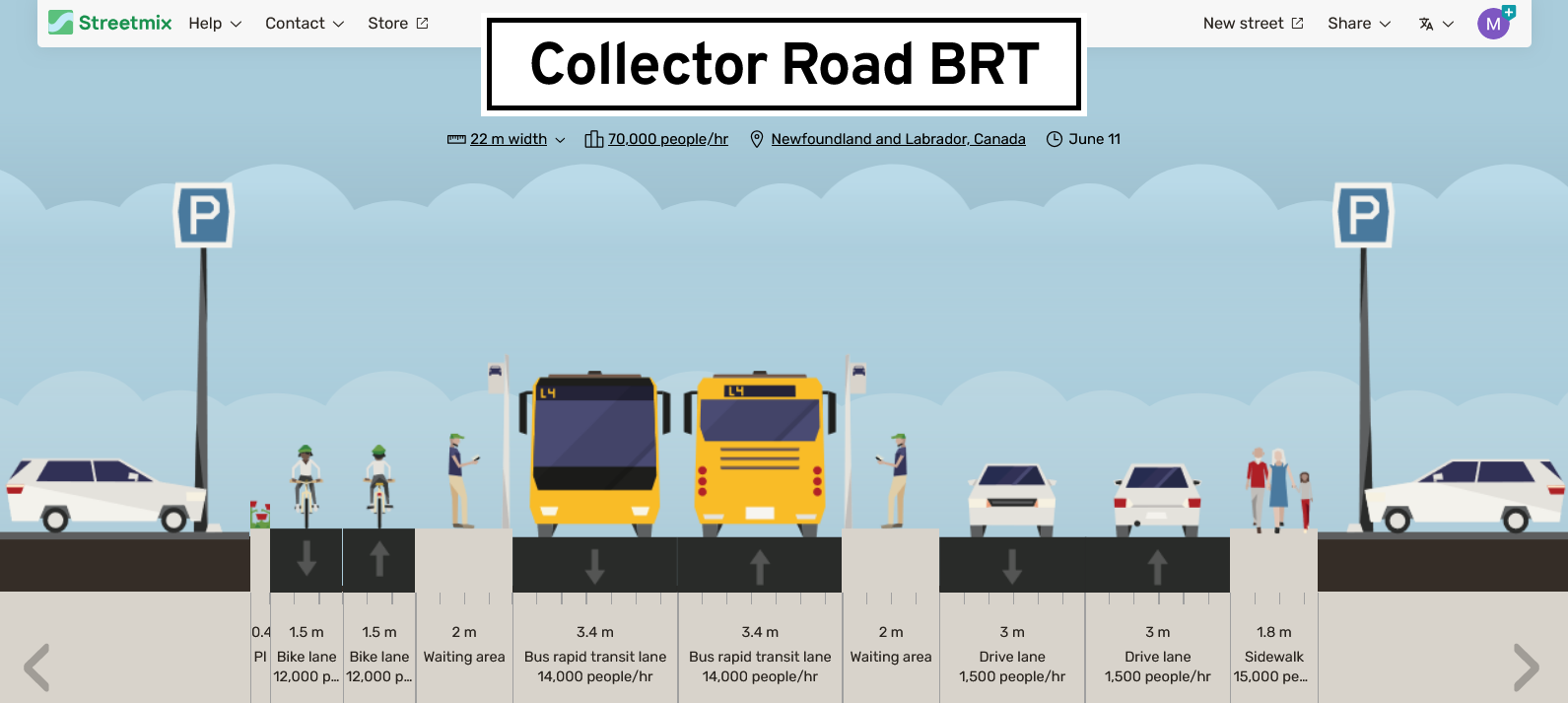
To go beyond that, we could dedicate half of the road to something other than a car. Bus Rapid transit and bus local dedicated lanes would prevent buses getting stuck in traffic, and ensure they can get where they need to go. Providing protected cycling in the mix could also go a long way to ensuring year round mobility choice.
Arterial Roads
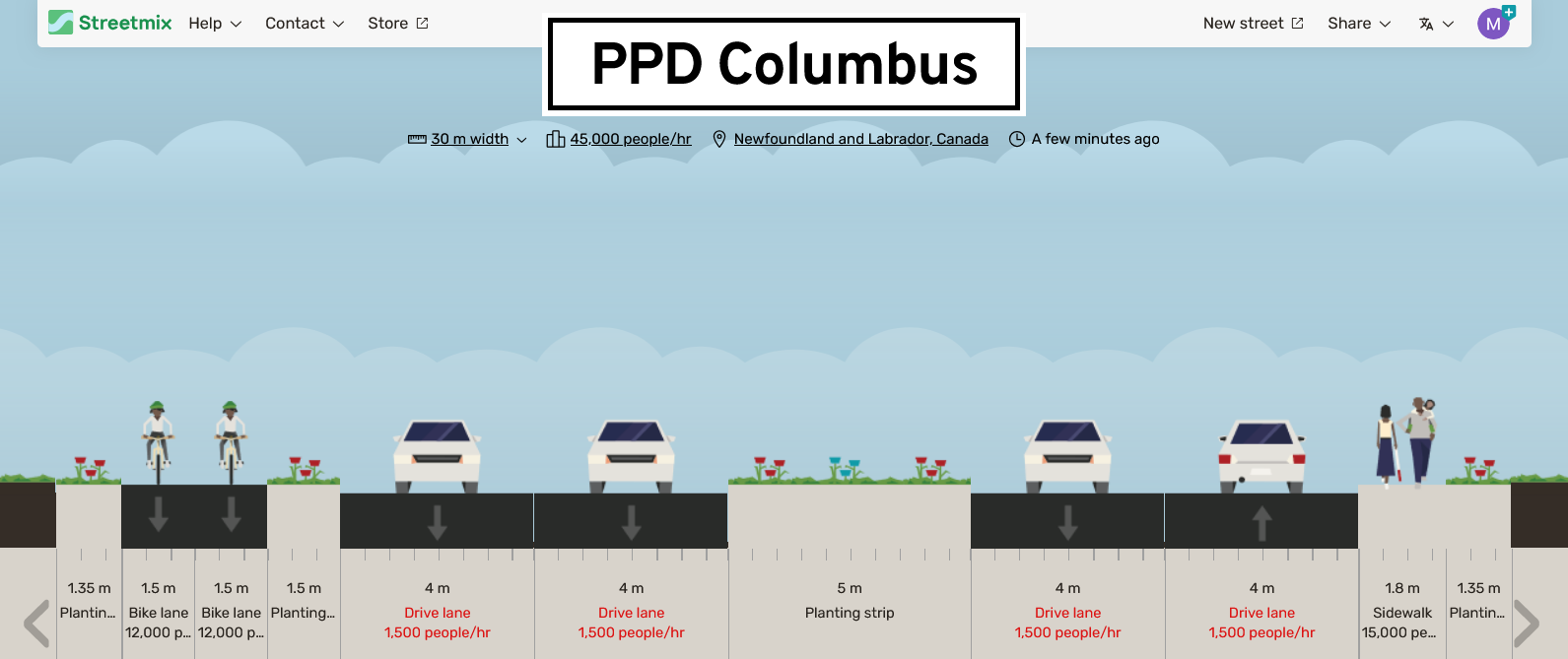
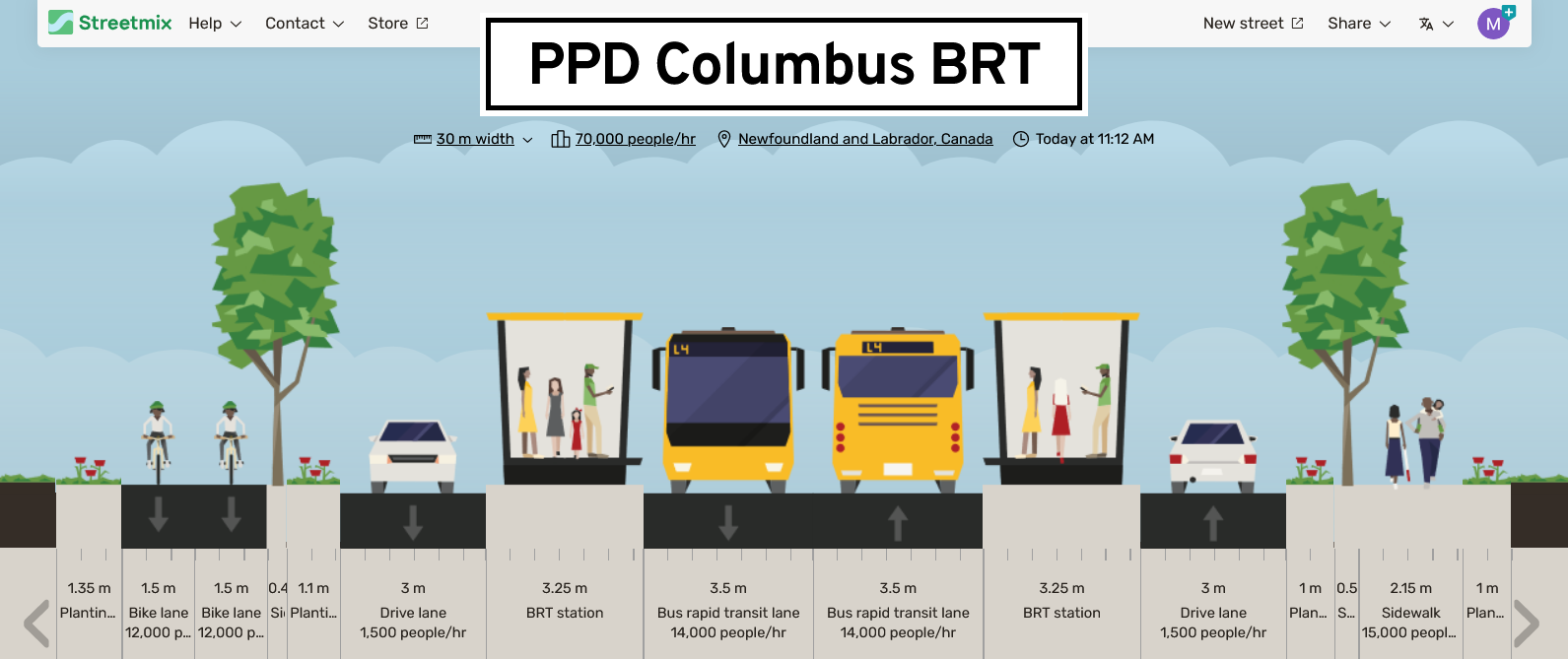
Columbus and Prince Phillip drive used to essentially be the highway. Before the Outer Ring Road was built, you would take Prince Phillip Drive to get to Confederation, MUN, or the Health Sciences Centre. However now not only do we have the Outer Ring Road, but we also have the Team Gushue Highway which just had the final phase announced for tender. We’ve tripled vehicle capacity and population has only gone up about 30% (170k to 220k). So we have ample capacity to reduce theses internal highways and get cars moving faster, on the highways, where they belong.
Close
Large rights of way are the perfect space to put a light rail, bus rapid transit system, and active transportation space. Either way, having lanes twice as large as recommended on roads designed like highways going through our city is an outdated system. To have safer streets there must be more space for people outside of cars. Jersey barriers and signs are cheap. Metro St. John’s could rapidly install hundreds of km or micro-mobility lanes and transit only lanes without even lifting up a single square centimetre of asphalt. At the end of the day, our streets should be for people, not cars.
 streetsafp.ca